The Curse Girl (Fairy Tale Fridays)(Indie In Summer)

I know it's not quite Friday but consider this a double dose of Fairy Tale Fun with a book review today and an author interview tomorrow!

Taking a modern spin on the classic tale of "Beauty and the Beast", Kate Ellison's The Curse Girl begins with teenage Beauty, also known as Bee, arriving at the doorstep of a strange old house known to be the home of the village Beast. Dropped off by her father as something of a sacrificial lamb to save his family, Bee bravely enters the house where a world of magic awaits her.

The labyrinthine mansion with its self-lighting candles and ever-changing rooms and corridors is but one of many wonders Bee encounters as the structure's denizens are even more unique. She meets Butler and Housekeeper who are as integrated into the house as their names suggest and the little girl Rose, who becomes more plant-like every day. And then there is the Beast. Rather than some bizarre monster, Bee encounters the head of the household as a young man named Will. A large scar mars his countenance but the most beastly thing about him is in fact his short temper. Bee, however, has a fiery personality to match Will's own, and she soon discovers that it's up to her to break the riddle-filled curse that holds them all enslaved if she ever wants a chance to go home.

I enjoyed the fantasy elements that Kate Ellison blended into this story. The characters are intriguing and the puzzles involved in the curse were unique. I didn't find Bee particularly easy to relate to - the book would probably be better suited to a younger audience - but I still appreciated her spirited nature. I also enjoyed the relationship between Bee and Will, which developed throughout the story.

With a sprinkling of fairies, witches, and shapeshifters, this urban fantasy work manages to update "Beauty and the Beast" for today's teen readers, while still maintaining the elements of the story that make it so beloved. All in all, The Curse Girl is a creative new take on a classic story.

This work also marks an odd hybrid between my Indie In Summer feature and my 2011 Fairy Tale Challenge (7 out of 12).  Stay tuned tomorrow for my interview with author Kate Ellison as we discuss her work and favorite fairy tales!

Too much of a good thing... (Top Ten Tuesday)

I know this is a first for me to jump into two Top Ten Tuesdays in a row, but the superb bloggers over at The Broke and the Bookish came up with another topic for which I'm eager to toss around my two cents:

Top Ten Eight Trends of which I'd Like to See More/Less
Awesome picture found here!
1. MORE: Though "cowbell" should be my number one on any list of what I want more of, the first trend I can think of is Stand Alone Novels!  I feel like series, and specifically trilogies, have become the norm and I really enjoy when authors can take the time to just write a single well-told story without any to-be-continued at the end.  I can think of a number of books that have been released since I began blogging (Matched, Nightshade, Paranormalcy, The Iron King, etc) that I've avoided reading because I don't like to be in the middle of too many unfinished series at one time. I don't inherently object to series books, but I much prefer them when each entry in the series is a complete story in itself.  (A great example is Delirium - though I recently found out Lauren Oliver has a sequel in the works, the first book works perfectly fine on its own.)

2. LESS: I'm a fan of color and the first trend I can think of that's starting to wear on me is Black Covers.  I talked a bit about the Twilight-esque covers in the comments of this post, but all-in-all I'm a bit amazed how many covers tend toward such dark colors these days.  I would think that bright vivid ones would be more eye-catching but I'm always amazed when I walk into the few remaining bookstores near me and am confronted by black, black, and more black. 

3. MORE: Though I mentioned the book in a previous Top Ten Tuesday post about movies, one of my favorite books is The Princess Bride by William Goldman.  I mention it here because I think it's a great example of a Young Adult Work that Appeals to Males as well as females, and I would love to see more books in that category.

4. LESS: Along those same lines, I think the book world can afford to do with less novels about Thirteen-Year-Old Girls riding around in Limos and Drinking Martinis.  I know a lot of what I read as a young girl was very much fluff-fiction, but I seem to see lots of books these days geared at girls in which the main characters are rich socialites.  Though I understand the fun of these characters, why not decrease this trend and have more females making a difference rather than just enjoying themselves.

5. MORE: And while I'm on the subject of having more characters make a difference, my wishlist of trends definitely includes more Novels Set in the Real World.  I like dystopia as much as the next reader, but I also enjoy a good story about friendship or a classic mystery in a suburban setting. 

6. LESS: Reading should be about connecting to real life as much as it should be about escapism or daydreaming, and while I'm dreaming about more novels with realistic settings, could we also get a little less Paranormal?  For a while it was just vampires that were overdone but now it seems that werewolves, zombies, angels, demons, psychics, and ghosts have all happily joined the parade.

7. MORE: Someone once explained the supernatural trend in literature in saying that all the good "normal" stories have already been told, but if that truly is the view, I say, why not retell them?  Great stories do stand the test of time and I love the trend of Updating and Reinventing Classics.  I'm not talking about all the "And Zombies" quirk stories that, for me, fall firmly in the LESS category, but rather the young adult novel that focuses on making a classic story accessible to today's audience.  There's a wealth of source material, so really authors, what are you waiting for?

8: LESS: Just don't be one of the countless authors that's writing a Retelling or Sequel to Pride and Prejudice.  Please.  Please, please, please, can we as a literary community agree to finally leave the Bennets, Bingleys, and Darcys alone?  The original is a masterpiece and some of the new spoofs and homages have been great fun but the market is saturated and I really think we can all survive without another glimpse into the life of Denny's cousin's butler or Georgiana's friend's secret diary.  There are countless other works out there - even plenty other Austen pieces - that haven't had the abuse attention given them that Pride and Prejudice has garnered.

I think I'm going to stop this list at eight today.  As always, I love to hear your thoughts, agreements, and disagreements.  Thanks for stopping by and thanks again to The Broke and the Bookish for always hosting such a fun start to the blogging week! 

The Autobiography of Mrs. Tom Thumb

I have a weakness for fictionalized biographies.  Joining books I've loved in this unique genre next to What is the What, Romancing Miss Brontë, and The Lost Summer of Louisa May Alcott is Melanie Benjamin's latest novel, The Autobiography of Mrs. Tom Thumb.  

Mrs. Tom Thumb whose name graces the title of this novel, was the better known moniker of Mercy Lavinia Warren Bump Stratton - a name whose size matches the personality, though not the stature, of an amazing yet diminutive woman. Born with a form of proportional dwarfism, "Vinnie" as she was called by friends and family, rose to fame under the wing of showman P.T. Barnum and married to Barnum's star, General Tom Thumb.

From humble beginnings as a school teacher, Vinnie wanted something more out of life and eventually seized the opportunity to travel the world with the circus as her ticket. Her fame and renown grew raising her to the social circles of New York's elite while she and her husband basked in the company of presidents and royalty throughout Europe.

Melanie Benjamin's story The Autobiography of Mrs. Tom Thumb takes a glance inside Vinnie's mind and world, and the story unveiled is engaging and fascinating. The historical details of circus life and the figures of P.T. Barnum, Tom Thumb, and Vinnie herself are drawn with a degree of realism that reflects Benjamin's meticulous research. The story is fully captivating from start to finish and headstrong Vinnie - with her sharp wit, gentle heart, and untamed dreams - is definitely a heroine to love.
What do you think of historical fiction biographies?  Do you prefer nonfiction or do you enjoy authors' reimaginings of historical figures and events?

An advance review copy of this book was provided by LibraryThing's Early Reviewers Program.  This review represents my honest and unbiased opinions.  The Autobiography of Mrs. Tom Thumb is available now.

Author Interview - Mark Young (Indie in Summer)

In my last post I was raving about the latest Kindeal - $0.99 for the eBook of Revenge by Mark Young - and now it's my pleasure to introduce the author himself.  Please join me in welcoming a man of many talents of which writing is only one, Mark Young.

*applause, applause*

Hi Mark! Tell us a bit about yourself. How did you get started as an author?

After combat in the Vietnam war, I returned to college to become a journalist and picked up a copy of Ernest Hemingway’s For Whom The Bell Tolls. His writing about war and human conflict resonated with me because I knew he was writing from experience. His writing started me thinking about writing fiction. Shortly thereafter, I took the next step—since I was already writing news—and began to think of writing a novel …someday in the future. Many years later, after writing two other novels, I decided to become an indie author/publisher and launch Revenge.

The intricate suspense story and the character development were wonderfully balanced in Revenge. Which of these aspects did you more enjoy crafting? Was either easier or more of a challenge for you?

I find writing suspenseful plots easier than creating believable characters. Story plot lines come easy to me, and I found my past career in law enforcement gave me ample material to work from as I created stories. Every writer, I imagine, has strong and weak points. Character development is one of my weaker points. So, I’ve tried to focus on developing my skills and knowledge to create solid, believable characters that readers can visualize and relate to in some fashion. My main characters—Travis Mays and Jessie White Eagle—are vividly alive in my own mind. In fact, they still talk to me from time to time—but that’s another story.


Your book also has a wonderful setting and captures the mountains and rivers of Idaho as well as city streets of California. Are your travels as varied as those of Travis Mays or are your descriptions from research of those locations?

All my scenes in Revenge are from places I know well. This plot concept arose from my life-long goal to learn how to fly fish and where I honed my fishing skills along the Lochsa and Clearwater rivers in central Idaho. As I traversed those rivers and learned about the history and people of those mountains, the story began to unfold.

I really appreciated that your Native American characters were believable and not drawn as stereotypes. What prompted you to include characters from the Nez Perce tribe?

First, their land and history in Idaho intrigued me, a nation whose boundaries once extended into eastern Washington and western Oregon before the Treaty of 1861.

Also, I am part Cherokee on my mother’s side, and have always had an interest in Native American issues. Before I became a police officer, I worked on a number of newspapers. One publisher allowed me cover the 1973 takeover of Wounded Knee in South Dakota. I was able to sneak onto the reservation and interview American Indian Movement leaders Russel Means and Dennis Banks before federal authorities closed it off to outsiders.

Finally, I did not feel my main character—Travis Mays—could be involved in anything along the Clearwater tributaries without including characters from the Nez Perce nation. And Jessie White Eagle is quite a character.

Photo from author's website
Travis and Jessie White Eagle begin their relationship when she serves as a river guide to him. Do you share Jessie's talent for kayaking?

I share Jessie’s love of the mountains and rivers. Though I like to kayak, I would not consider myself an expert. As part of my research for this novel, I signed up with a female guide from the Three Rivers rafting company to take me down the Lochsa River whitewater on a raft.

Confession time: I fell in the Lochsa River twice and my guide, Tasha Lyons, fished me out both times. She is an amazing athlete, who works on the river during the summer while working on her teaching credential the rest of the year. And, yes, the Three Rivers company in the novel actually exists, but all the characters are a figment of my imagination.

One of the more turbulent whitewater rapids, dubbed Grim Reaper in the novel, actually exists by that name. It’s aptly named. This was one of the two places I fell in, and it was from this experience that I could write so vividly. Hanging upside down in white turbulence is quite an adventure. One of the rookies on my raft—who thought she was helping—hung on to my legs as I was face down in the turbulence. I couldn’t get back up without smacking her. Fortunately, Tasha jumped in and told her to back off, then she helped me climb onboard. True story!

What authors or works would you say have inspired or influenced you?

Ernest Hemingway, of course, was one of the first authors to really inspire me about writing. I have been an avid reader all my life, hiding away in the library on Saturdays as a child after my chores were done. Though I’m more inclined to write police/mystery/action-adventure novels, I enjoy mixing up my reading choices. Among my favorite contemporary mystery suspense and thriller authors are Michael Connelly, Tess Gerritson, John Lescroart, David Balducci, Lee Childs, and James Scott Bell. These and other genre writers I read regularly to study their styles, techniques and writing craftsmanship.


What do you find to be the greatest challenges and rewards of being an indie author?

The greatest challenge as an indie author is that everything falls on your shoulders once the novel is written—editing, formatting, cover design, marketing, and advertising. I pay others for editing services, because an author who self-edits is akin to an ailing medical patients performing surgery on themselves. But the indie author still needs to coordinate with others to get all these tasks done, or do it all themselves. Another big challenge is getting the word out to readers. An indie author generally does not have a large advertising budget, nor do they generally have access to other avenues of publicity open to traditional publishers. Sometimes you feel like David facing the Goliaths of the publishing world. Opportunities like this interview on your wonderful blog help indie authors connect with readers.

The greatest reward is that you don’t have to wait eighteen months to two years before your novel reaches readers. Once everything is in place, a few clicks and the novel is up and ready to be sold in a matter of a day or two. You have more control over price, distribution, and content. Once an indie author determines who their readers are and what those readers want, the writer does not need to water down or change their characters to meet a broader market as defined by traditional publishers. They have the freedom to write the kind of unique character their readers expect and want. Finally, an indie writer does not have to wade through hundreds of rejections from traditional publishers or agents as they try to get their works before the public.

What projects are you currently working on?

I am working on an international thriller titled Off The Grid, with an expected release date the first week of December. The main character is Gerrit O’Rourke, a Seattle cop with a doctorate in computers and nanotechnology, and a veteran from the Iraq and Afghanistan wars. He and a mysterious woman, Alena Shapiro, find that they must team up with others to live Off The Grid when they stumbled over a conspiracy that threatens national security. Their foes have unlimited resources, and Gerrit and his companions must learn to elude a highly-technological manhunt. And for Travis Mays and Jessie White Eagle fans, they make a limited appearance in this novel as well.

Which brings me to a point about the characters in my novels. From my own experiences as a cop for twenty-six years, I learned that the law enforcement community is relatively small. I’ve maintained friends and acquaintances in local, state and federal agencies, as well as contacts around the nation and other counties. So, in my novels it is not unusual for a Travis Mays character to have contact with a Gerrit O’Rourke, as well as other characters in my novels. You just never know when your favorite character might suddenly emerge in someone else’s novel.

Where can we find out more about you and your work?

Unfortunately, the only place right now is on my blog, Hook’em and Book’em. Before the release of Off The Grid in December, however, I will finally have my web sit up and running at MarkYoungBooks.com and a blog—connected to that web site—simply titled Mark Young. Meanwhile, you can connect with me on Twitter or Facebook, or shoot an email to me at MarkYoung@MarkYoungBooks.com.

The print version of Revenge should be out later this summer, and eBook version is available on Amazon, Barnes & Noble, and Smashwords.


Thank you for agreeing to this interview!

Thanks for inviting me on this great blog, Lisa. It is a privilege to be able to share my passion for writing with your readers.

Revenge: A Travis Mays Novel (Indie in Summer)

I've been reviewing a wealth of fantasy lately so I'm pleased to jump genres again and spotlight an action thriller.

Shouldering responsibility for the death of a witness, Travis Mays walks away from police work and settles into the scenic mountains of Idaho accepting a job as a criminology professor. Content with teaching and learning to kayak with the help of a lovely instructor, Jessie White Eagle from the local Nez Perce tribe, Travis has no desire to return to the life of an investigator. However, when trouble strikes Jessie's family and a deadly sniper seems to have targeted Travis and his loved ones, Travis may have no choice but to confront his past and a killer set on Revenge.

Action packed from the very beginning, Mark Young builds layers of suspense and subterfuge into his story and he does a fabulous job weaving great characters into this fast-paced thriller. Travis was an original lead hero and Jessie was far from a sniveling damsel in distress stereotype. I am always impressed when the female lead can hold her own and Jessie was as interesting and complex a character as Travis. The supporting characters were also well drawn and the identity of the killer was as unpredictable as the next victim.

Along with realistic characters and an intricate mystery, Young excels at painting a scenic and varied setting for the story. From whitewater rapids in Idaho, to gritty California city streets, and capturing the culture clash of tradition and modernity among the Nez Perce people; details bring the narrative fully to life. Reminiscent of Michael Connelly's Harry Bosch series or Tony Hillerman's Jim Chee books - Revenge, the first Travis Mays novel, is a solid work that promises great things for future mysteries by Mark Young.
This post also marks a return to Indie in Summer - my tribute to small press and independent writers - but I have to say that if you didn't know Revenge was an independent work, you would be hard pressed to believe the claim that author Mark Young has not yet been scouted by a big name publisher.  The book was definitely on par with bestsellers in the genre and at just $0.99 for the Kindle eBook it's a bargain not to be missed!

Stay tuned this week for my interview with author Mark Young!

Readin' Tough (Top Ten Tuesday)

Alright NKOTB fans, sing it with me,"Woah oh oh oh oh - Readin' Tough!"

Okay.  Maybe not.  For those who never quite got into boy bands of the late 1980's, I'll spare the cheesy intro and jump right to this week's Top Ten Tuesday topic, books that deal with tough issues.  As always TTT is hosted by the awesome bloggers of The Broke and The Bookish.  For those visiting Her Book Self for the first time, thanks for stopping by and I hope you'll check out some of my more regular content as well!  I have eighteen books to spotlight today - and yes I know it's Top TEN Tuesday, but this is a list of eighteen books on ten tough issues.  I tried to pull a sampling of both fiction (f) and nonfiction (nf).  All of them are amazing books and the majority of them did make me cry - if it's underlined, it's linked to my review here or at LibraryThing.  Without further ado (in no particular order):

Top Ten Books Dealing with Tough Issues
(Or Top Eighteen Books Dealing with Ten Tough Issues)

1. The Holocaust
It's hard to think of a more appropriate tough topic to read about than the Holocaust, similarly it's difficult to think of just one book that deals with this topic amazingly well.  For that reason, I've chosen three:

  • The Book Thief by Markus Zusak (f)
  • The Diary of a Young Girl by Anne Frank (nf)
  • Night by Elie Wiesel (nf)
Anne Frank's Diary and Wiesel's memoir are both incredibly powerful and moving works, while Zusak's The Book Thief, albeit fictional, takes such a different perspective on World War II Germany that I had to include it in my list as well. 
 
2. Slavery and Racism in America
These should probably be listed as two separate tough issues but the length and strength of the books I came up with for all the topics on this list prompted a combine here.  These two could also be listed under the very best books I ever had to read for schoolwork and there's a reason that a decade and a half after encountering them they remain two of my all time favorite works of literature.

3. Darfur and the Lost Boys of Sudan
I went with a nonfiction and a fiction pick for this one since I know some people are polarized about which they prefer to read.  Both books are told with an excellent narrative voice (one real and one drawn) and though the stories in them are sometimes difficult to hear, they are stories that need to be told and need to be heard.

4. Genocide in Rwanda
Speaking of stories that need to be heard... Paul Rusesabagina's autobiography was the basis of the movie Hotel Rwanda and as powerful as Hollywood is at telling harrowing stories, there is little impact as great as reading from Rusesabagina's own words.  Left to Tell is another first-hand account of the horrific events and the unconquerable nature of the human spirit.  Meanwhile, Parkin's novel is a story of Rwanda recovering and rebuilding, a warm story of daily life that still includes the scars of the past but looks to a hopeful future.

5. Women in Afghanistan under the Taliban
Yes, I could have talked about The Kite Runner as a book dealing with a number of tough issues, but I'm one of few that enjoyed Hosseini's second novel even more than his first.   Though Afghanistan is rife with tough issues to tackle in literature, I wanted to spotlight these novels as dealing specifically with women living under Taliban rule.  For those that want a nonfiction take, Rodriguez chronicles the experiences of an American woman living as an expatriate in Kabul and shares her own stories as well as those of her friends who grew up in the city. 

6. Alzheimer's Disease (specifically Early Onset)
Remarkably told from the first person perspective of a female scientist suffering from Early Onset Alzheimer's Disease, this book takes an emotional and fully humanized inside study of the disease and its effects on the individual and all of the loved ones impacted by the degeneration of the mind.  


7. Clashing Cultures in the World of Modern Medicine
  • The Spirit Catches You and You Fall Down by Anne Fadiman (nf)
This one is borderline nerdy-science but also tells a fascinating story of a Hmong child with epilepsy.  In the traditional culture epilepsy is seen as a gift where the seizures represent a communing with spirits but in Western medicine it is a disease to be cured.  Fadiman's book looks at the communication break-down and lack of respect that occurs when two cultures clash and the life and health of the child caught between the factions. 

8. Race, Poverty, and Inequality in Urban America
  • There Are No Children Here by Alex Kotlowitz (nf)
When people rave about Erik Larson's The Devil in the White City,  this is the book that I respond with as a "Must Read" book about Chicago.  (Not for anything against Larson's work, but this one to me speaks much more intensely about the city.)  Following the true story of two brother's growing up on Chicago's West Side, the title comes from a quote in which their mother states, "There are no children here.  They've seen too much to be children."

9. Child Abuse
I have a hard time reading books about all these topics, but child abuse especially is one that I would prefer to close my eyes to.  However, I realize that no good comes from ignoring difficult topics and being aware of an issue is the first step towards doing something to stop it.   I chose both a fiction and a memoir selection for this topic and though neither was pleasing, they both tell really important stories.

10. Deaf Culture, Animal Rights
I can't say enough good things about this book and animal rights and deaf culture are just two of the intense topics dealt with in this emotional and wonderful story.  Character driven and beautifully told, this is the kind of book that manages to be heartwarming and heartbreaking at the same time.

So there you have my choices.  As always, I'd love to hear which ones you agree and disagree with and I look forward to reading everyone else's lists too!

Meet Mount TBR

Since I'm still making my way through the thousand page monstrosity masterpiece that is A Dance With Dragons, I thought I would take a weekend post to give you lovely readers a peak... I mean a peek at what I lovingly refer to as Mount TBR (TBR= To Be Read).  My LibraryThing account has over 120 books marked TBR but my GoodReads shelf marks my more immediate plans.  With no further ado, allow me to introduce you to (a small portion of) Mount TBR!

I have some "Fiction Makes You Think" books:

Sarah's Key by Tatiana de Rosnay
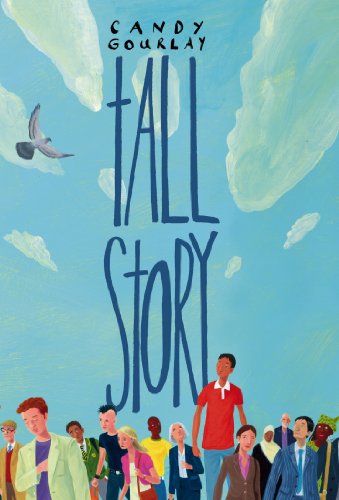
Tall Story by Candy Gourlay
The Ambition by Lee Strobel

Then there's the "Touch of Paranormal" works:
Phantom Rising by Dawn Judd
Hungry For You by A.M. Harte
Discovery of Witches by Deborah Harkness

I've got the "Smoky Black Covers" section:
Middlesex by Jeffery Eugenides
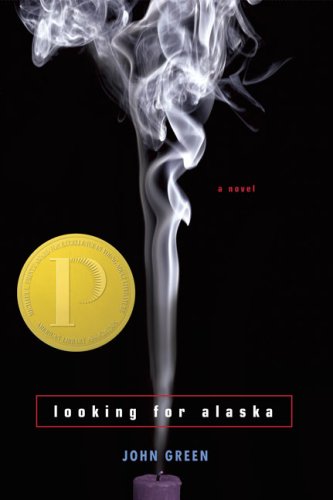
Looking for Alaska by John Green
Reckless by Cornelia Funke

And the "Random YA Mash Up":
Leviathan by Scott Westerfield
The Outside of a Horse by Ginny Rorby
Tyger, Tyger by Kersten Hamilton

Again, this is only the tip of the iceberg.  A few of these are already high priority because they were lent to me by friends or they're books I promised to review; but otherwise, I have no preference of which to read first so if anyone has any "loved it/hated it" comments, I'd love to hear thoughts on what I should get to soonest!  What's at the top of your TBR pile right now?
Rapunzel (Fairy Tale Fridays)


"Rapunzel, Rapunzel,
Let down your hair!"

Those words may be the most iconic and memorable portion of the story of Rapunzel, but the phrase, though oft repeated, is just a small portion of the original fairy tale.  Since my last entry for Fairy Tale Fridays featured Melisande, an updated long-hair princess story, I thought I would take this week to explore the classic version of Rapunzel.  As is often the case, the story has origins dating to the 1600's but the version that most consider the classic tale is the one recorded by The Brothers Grimm. (Full text of the story is available here.)

In this version, a childless couple lives next to a walled garden owned by a witch.  Seeking to please his wife, the man sneaks into the garden to steal some rampion.  Though successful at first, the man's thievery is discovered by the witch who demands, as payment, "the child [his] wife will shortly bring into the world".  It is unclear in the story whether the wife was expecting before the man went to steal the rampion.  I used to assume the the wife's craving was associated with pregnancy, but an interesting alternative was that the wife was simply looking for things denied to her as part of the frustration of her inability to have children.  With this perspective, it could also be taken to mean that the man's interaction with the witch caused his wife to conceive.  It could be that the only reason the man agreed to the witch's deal was that he did not believe his wife would ever have a child.  Needless to say, the man strikes the bargain, a child is born, and the girl is given over to the witch who promises to care for her as a mother.  (Rampion is a plant similar to lettuce or spinach and is also called rapunzel, giving the girl and the story its name.) 

Rapunzel, of course, is kept in a door-less tower by the witch who comes to see her and climbs into her window by requesting each time the well-known phrase, "Rapunzel, Rapunzel, let down your golden hair!"  In the Grimm story, her hair is golden and it's one of few details preserved from the original story in the Disney film Tangled.  (Loved the film, but for now I'm going to tailor this post towards the original story.)  The witch's method of entry into Rapunzel's tower is then observed by a prince who hears Rapunzel's singing and falls in love with her.  She is frightened by him at first but he wins her over with kind words and compliments.  He pleads for her to escape with him and she instructs him to "bring a skein of silk" every time he comes to see her and plans to construct a ladder to use to climb out of the tower.

This is definitely the portion of the story where the reader could conceive of better plans than the protagonists.  One wonders why the witch would not be suspicious of skeins of silk accumulating in the tower room.  And of all the materials to ask for, why silk for a ladder when hemp rope, linen, or even cotton would be a much better material to work with.  Granted, Rapunzel also could have cut off her own hair and climbed down the tower herself.  I don't know the reason for Rapunzel's instructions, but I like to imagine that she is testing her prince.  Silk would be expensive and rare so she was measuring how much her freedom was worth to the prince, and by instructing him to come every day she was testing his devotion to her.  Rather than just run off with him, he needed to prove himself worthy of her first.

Of course, before the prince's love and determination are witnessed, Rapunzel makes a big blunder.  She reveals her relationship with the prince to the witch.  The witch cuts off Rapunzel's hair and casts her into exile.  Waiting in the tower for the prince, the witch fools him with the hair into climbing the tower before revealing that Rapunzel is gone.  And then the prince throws himself out the window.  I'm not sure why he was so easily upset by the witch.  I would have preferred for him to fight for Rapunzel or demand to know her whereabouts.  I can only assume - or at least hope - that there was some magic involved in the prince's instant turn toward despair.  Though he survives the fall from the tower, he is blinded by thorns which prick out his eyes.

One might expect a Brothers Grimm story to end here.  Rapunzel is cast out, the prince is blind, and the witch is seemingly triumphant.  However, there is something better in store for the ending of this tale.  The prince wanders far and wide, until,

"...he came to the desert place where Rapunzel was living. Of a sudden he heard a voice which seemed strangely familiar to him. He walked eagerly in the direction of the sound, and when he was quite close, Rapunzel recognized him and fell on his neck and wept. But two of her tears touched his eyes, and in a moment they became quite clear again, and he saw as well as he had ever done. Then he led her to his kingdom, where they were received and welcomed with great joy, and they lived happily ever after."
I love that this one ends with the classical last three words.   As much as I enjoy when tales take darker turns, I always appreciate it when things finish on a positive note. 

This post is part of my 2011 Fairy Tale Challenge (6 out of 12) inspired by Tif of Tif Talks Books.  What do you think about the original version of Rapunzel?  Feel free to share your thoughts in the comments section here or link up with your own post about this tale or any fairy tale you feel like reading this month!